MinSU joins national push to advance small-scale fisheries at PSSFSN 3
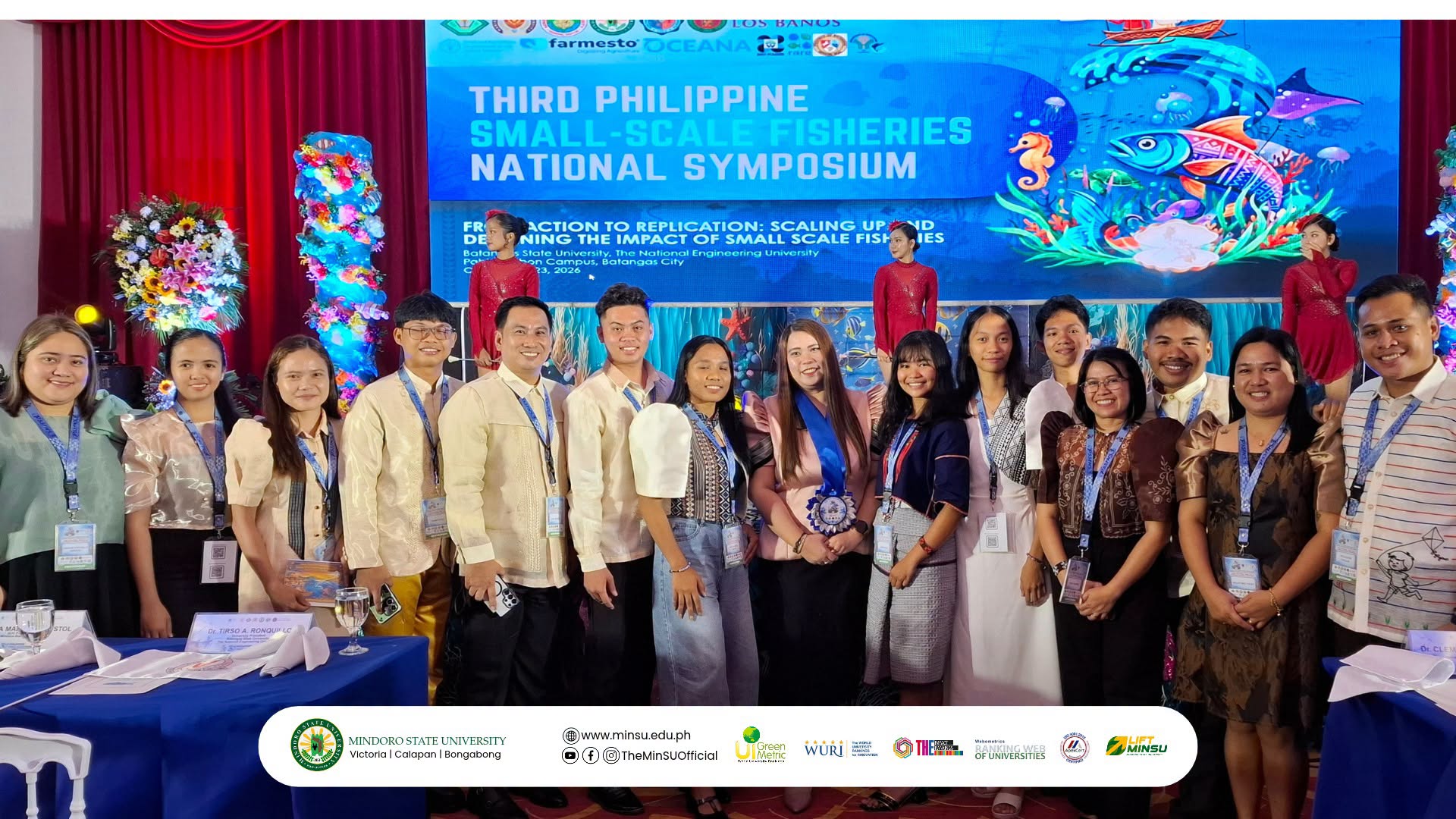
Mindoro State University (MinSU) strengthened its participation in national efforts to advance sustainable small-scale fisheries as a co-organizer of the Third Philippine Small-Scale Fisheries National Symposium (PSSFNS 3), held on October 21–23, 2026, at Batangas State University–The National Engineering University, Pablo Borbon Campus.
The three-day symposium gathered fisheries experts, researchers, policymakers, small-scale fishers, government representatives, and other stakeholders to discuss pressing challenges in the sector and identify strategies to improve the livelihoods and welfare of coastal communities.
The MinSU delegation was led by University President Dr. Enya Marie D. Apostol, together with Mr. Leonel C. Mendoza, Officer-in-Charge Vice President for Research, Innovation, Technology and Extension; Ms. Mary Ann R. Royo, Head of the Institute of Fisheries; and other University faculty members, researchers, graduates, and students.
Carrying the theme “From Action to Replication: Scaling Up and Deepening the Impact of Small-Scale Fisheries,” the symposium emphasized translating research findings, policies, and community-based initiatives into practical and sustainable approaches that can be replicated in fishing communities nationwide.
As part of its participation, MinSU faculty members, researchers, graduates, and students presented 11 research papers through oral and poster presentations, covering marine biodiversity, aquaculture, coastal conservation, fisheries management, and sustainable resource utilization.
Among the faculty research presentations were studies on the first recorded occurrence of the invasive black mussel (Mytella strigata) in Oriental Mindoro by Ms. Elsie Y. Guibone; the development of seaweed-based wines presented by Ms. Mailen Mae B. Yadao; and community-based seaweed production initiatives presented by Dr. Katherine Sanchez-Escalona.
Under the undergraduate oral presentation category, MinSU students and graduates presented studies on shipworm occurrence in Pola, mangrove carbon stocks and conservation in Bulalacao and Bongabong, seagrass diversity, and the role of traditional knowledge in fishing practices among small-scale fishers in Oriental Mindoro.
The University also contributed poster presentations on marine plastic pollution in Bongabong, the status and challenges of municipal capture fisheries in Bansud, and freshwater prawn populations in riverine ecosystems surrounding Mt. Dumali.
MinSU faculty members also served as session officials during the Fisherfolk Plenary Session, with Elsie Y. Guibone as session chair, Mary Ann R. Royo as moderator, and Fritz Dustin M. Fiedalan and Mailen Mae B. Yadao as rapporteurs.
The session featured fisherfolk representatives Restituto "Ka Resty" del Rosario, Ismael "Ka Mael" Rino, Reynilda Partida, and Gemma Domingo, who shared firsthand experiences and concerns affecting small-scale fishing communities.
Discussions highlighted the importance of protecting municipal waters from commercial fishing intrusion, recognizing the contributions and dignity of small-scale fishers, and strengthening cooperation among fishing communities, government agencies, and other stakeholders.
Ms. Partida emphasized the dignity and sense of community among small-scale fishers despite their economic challenges, while Mr. del Rosario raised concerns over the intrusion of large commercial fishing vessels into municipal waters. Mr. Domingo, meanwhile, underscored the importance of resilience, cooperation, and collective action in addressing difficulties faced by fishing communities.
Other plenary discussions throughout the symposium focused on social protection, inclusive fisheries governance, and research-based policies to promote sustainable fisheries management.
The event also featured the launch of Portrait of Gleaners in the Philippines, youth-led initiatives, scientific and art presentations, and student competitions aimed at encouraging greater participation in fisheries research and development.
On the final day, participants discussed the protection of the 15-kilometer municipal waters, emphasizing public participation, transparency, and stronger policy support to safeguard the rights and livelihoods of small-scale fishers.
The symposium concluded with the signing of the Batangas Manifesto for Small-Scale Fisheries, reflecting a collective commitment to addressing challenges in the sector. Guimaras State University was also announced as the host of the fourth national symposium.
Organized by the National Consortium for Small-Scale Fisheries Research and Development, also known as Too Big To Ignore–Philippines (TBTI Philippines), with support from TBTI Global and partner institutions, the symposium supported the objectives of the Food and Agriculture Organization of the United Nations' Voluntary Guidelines for Securing Sustainable Small-Scale Fisheries.
As a co-organizer of the symposium, MinSU will continue to strengthen institutional partnerships and promote science-based initiatives supporting sustainable fisheries, coastal resource conservation, and livelihood opportunities for small-scale fishing communities. (jdtdc)
#SDG14 #SDG17

302 Staff

10531 Students

9 Colleges

3 Years